In agriculture, variability is the enemy. Rain patterns change, harvest conditions fluctuate, and human error is inevitable.
For many suppliers, hitting the quality target is a matter of luck or the skill of a single factory manager.
At An Supply, we don’t believe in luck. We believe in Systems.
To serve global partners who demand consistency across hundreds of containers, we have built a robust Quality Management System (QMS) tailored for the volatile nature of agribusiness. We don’t just “inspect” quality at the end; we “engineer” it from the beginning.
Here is the blueprint of the QMS that protects your brand.
1. The Philosophy: SOPs Over Superheroes
Contents
Many Vietnamese factories rely on “Superheroes”—experienced workers who know the job by heart. The problem? If the superhero leaves, the quality leaves.
- The An Supply Way: We document everything into Standard Operating Procedures (SOPs). From the exact temperature of the roasting drum to the calibration frequency of the metal detector.
- The Result: Anyone trained on the SOP can replicate the result. We rely on the process, not the person.
2. IQC (Incoming Quality Control): The Firewall
Garbage In = Garbage Out. No amount of processing can fix rotten raw materials.
- The Protocol: Every truck of raw cashew nuts (RCN) or green coffee arriving at our gate undergoes strict sampling.
- The Tools: We use Kett moisture meters and grading sieves right at the gate. If the raw material doesn’t meet the “Input Spec,” the truck is turned away. We do not compromise to fill volume.
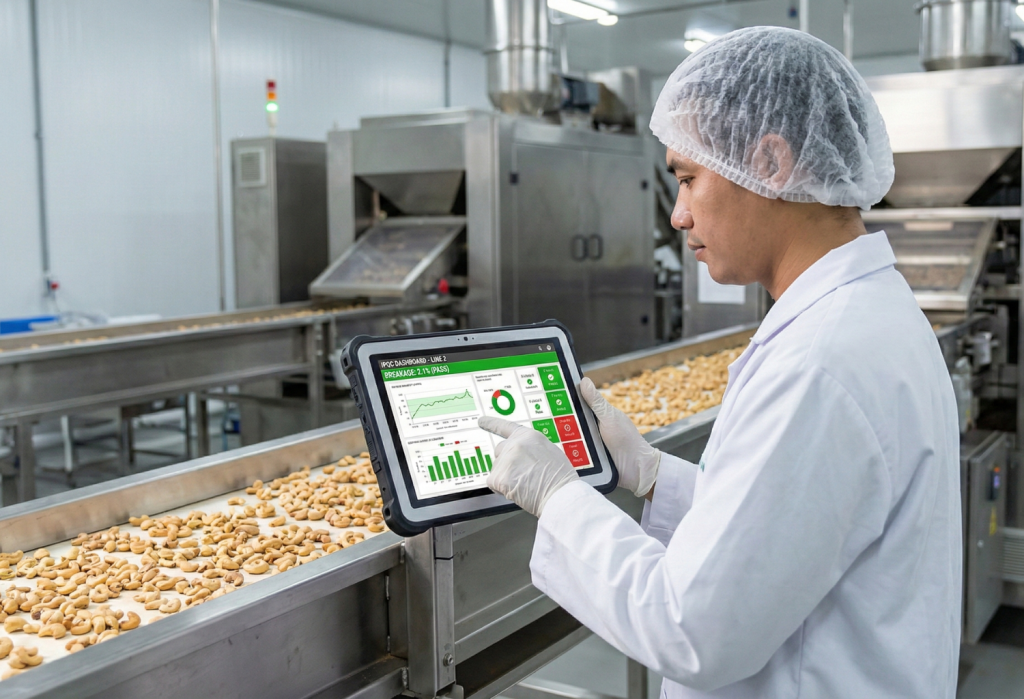
3. IPQC (In-Process Quality Control): The Real-Time Dashboard
Most errors happen during production. Waiting until the goods are packed to check them is too late.
- The Protocol: Our QC staff patrols the line every 60 minutes. They pull samples from the peeling machine, the grading belt, and the roasting oven.
- The Pivot: If the breakage rate spikes to 6% (target is 5%), the line stops immediately. The machine is recalibrated before tons of product are ruined. This proactive approach minimizes waste and ensures consistency.
4. CAPA (Corrective and Preventive Action): Killing the Root Cause
This is what separates professionals from amateurs. When a defect occurs (e.g., a customer complains about loose vacuum bags), most suppliers just replace the bags. That is a temporary fix.
- The An Supply Way: We trigger a CAPA Report.
- Root Cause Analysis (5 Whys): Why was it loose? The seal was weak. Why? The heat bar was dirty. Why? Maintenance skipped the cleaning schedule.
- Action: We don’t just re-seal the bags; we revise the Maintenance SOP to mandate cleaning every 4 hours. We fix the system so the problem never returns.
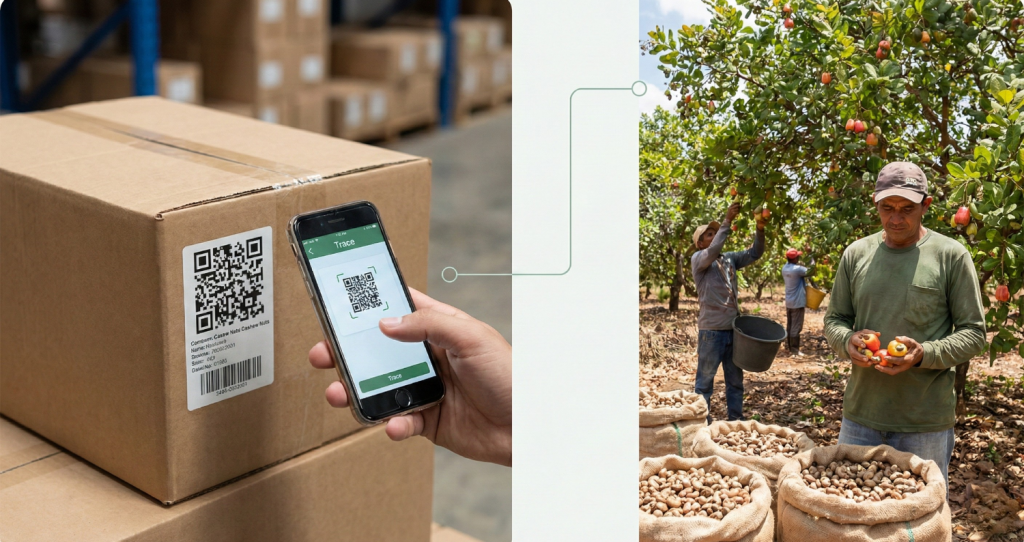
5. Traceability: The Digital Thread
In modern trade, you need to know the history of every bean.
- The System: We assign a Lot ID to raw materials upon arrival. This ID follows the product through cleaning, processing, and packing.
- The Power: If a problem arises in a finished carton in London, we can trace it back to the specific production shift, the specific roasting temperature, and the specific group of farmers who supplied the raw material.
Conclusion
A certificate on the wall is just paper. A Quality Management System is a culture.
When you partner with An Supply, you are not just buying agricultural commodities; you are plugging into a system designed for reliability.
Stop relying on luck. Start relying on logic. Partner with An Supply.