For coffee importers and roasters, the phrase “Processing Method” is just as important as the bean variety itself. The way a coffee cherry is transformed into a green bean can dramatically alter its flavor profile, shelf life, and price.
In Vietnam, two methods dominate the industry: Dry Processing (Natural) and Wet Processing (Washed). Understanding the difference is key to sourcing the right bean for your target market.
Here is a technical breakdown from An Supply to help you make the right choice.
1. Dry Processing (The “Natural” Method)
Contents
This is the oldest and most traditional method, predominantly used for Vietnamese Robusta.
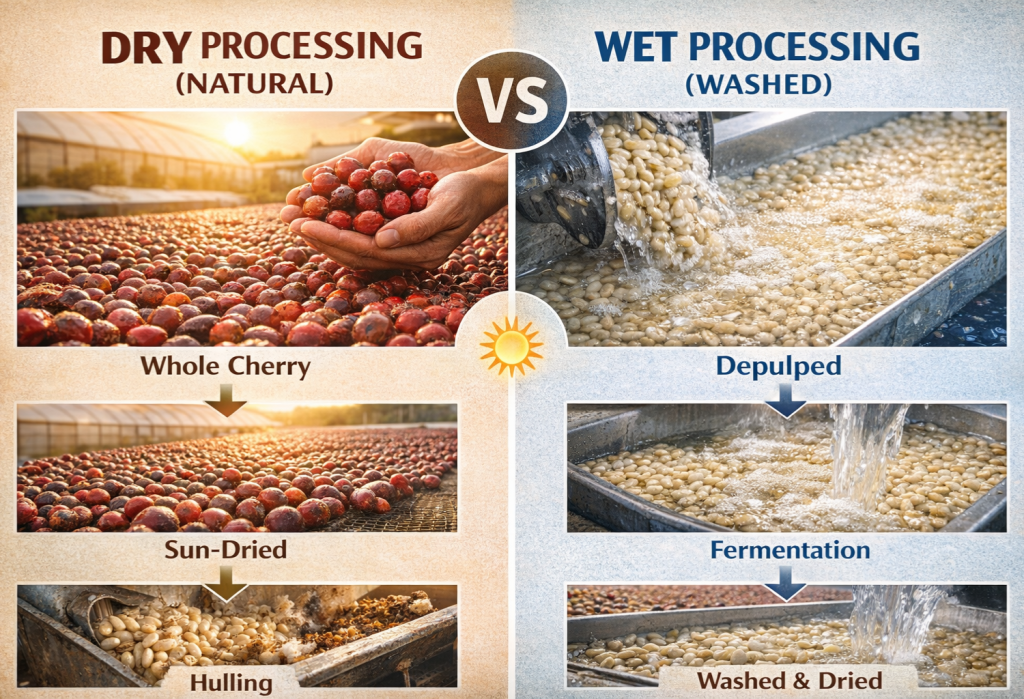
- The Process: The whole coffee cherries (skin, pulp, and seed) are spread out on drying yards or raised beds and dried under the sun for several weeks. Once the moisture drops to ~12%, the dried skin and fruit flesh are mechanically hulled off.
- The Flavor Profile: Because the bean dries inside the fruit, it absorbs sugars and flavors from the pulp.
- Body: Heavy, full, and syrupy.
- Taste: Intense sweetness, earthy notes, chocolate, and sometimes hints of ripe fruit.
- Acidity: Low.
- Best For: Instant coffee production (high yield), Espresso blends needing a thick crema, and markets that prefer a strong, bold cup.
2. Wet Processing (The “Washed” Method)
This method requires more equipment and water, commonly used for High-quality Arabica (in Lam Dong) and premium Robusta.
- The Process: The fruit flesh (pulp) is removed immediately after harvesting using a depulping machine. The beans (still covered in mucilage) are then fermented in water tanks for 12-48 hours to break down the sticky layer. Finally, they are washed clean and dried.
- The Flavor Profile: Since the fruit flesh is removed early, the flavor relies solely on the bean itself.
- Body: Lighter to medium.
- Taste: Very clean, crisp, and complex.
- Acidity: Higher, brighter acidity (citrusy or floral notes).
- Best For: Specialty roasters, premium single-origin products, and markets that dislike “earthy” or fermented tastes.
3. Comparison Table: At a Glance
| Feature | Dry Processing (Natural) | Wet Processing (Washed) |
| Typical Bean | Vietnamese Robusta | Vietnamese Arabica / Premium Robusta |
| Flavor Focus | Sweetness, Body, Intensity | Clarity, Acidity, Complexity |
| Water Usage | Low (Eco-friendly) | High |
| Cost | Generally Lower | Generally Higher (Labor & Water costs) |
| Risk | Mold/Fungus (if drying is uneven) | Over-fermentation (Sour/Vinegar taste) |

4. Why Sourcing with An Supply Matters?
Processing is where quality is either made or ruined. A poorly managed Dry Process leads to moldy flavors, while a botched Wet Process results in “stinker” beans.
An Supply acts as your quality firewall:
- For Dry Process: We ensure our partner farms use clean drying yards (or greenhouses) and turn the cherries regularly to ensure even drying, preventing the “musty” defect common in cheap Robusta.
- For Wet Process: We monitor fermentation times and water quality to ensure the resulting cup is clean and bright.
- The Result: Whether you need the heavy body of a Natural Robusta or the clean acidity of a Washed Arabica, we deliver a product that is consistent and defect-free.
Conclusion
There is no “better” method—only the right method for your specific product.
- Choose Dry/Natural if you want body and lower cost.
- Choose Wet/Washed if you want clarity and premium acidity.
Not sure which one fits your blend? Contact An Supply for samples of both varieties today.