In the cashew industry, “Grade W320” is just a label. The real value of the product is determined by what is NOT in the bag.
While AFI Standards allow for certain percentages of defects, a shipment that pushes these limits can destroy your profitability. For roasters and packers, defects are not just cosmetic issues; they are operational nightmares.
At An Supply, we categorize defects into three “Threat Levels.” Here is how to identify them, why they hurt your business, and how we eliminate them from our supply chain.
1. Immature Kernels (The “Flavor Killer”)
Also known as: Shriveled, Light-weight beans.
These are kernels that did not fully develop inside the shell before harvest. They look wrinkled, thin, and often have a greenish or grayish tint.
Why It Hurts You:
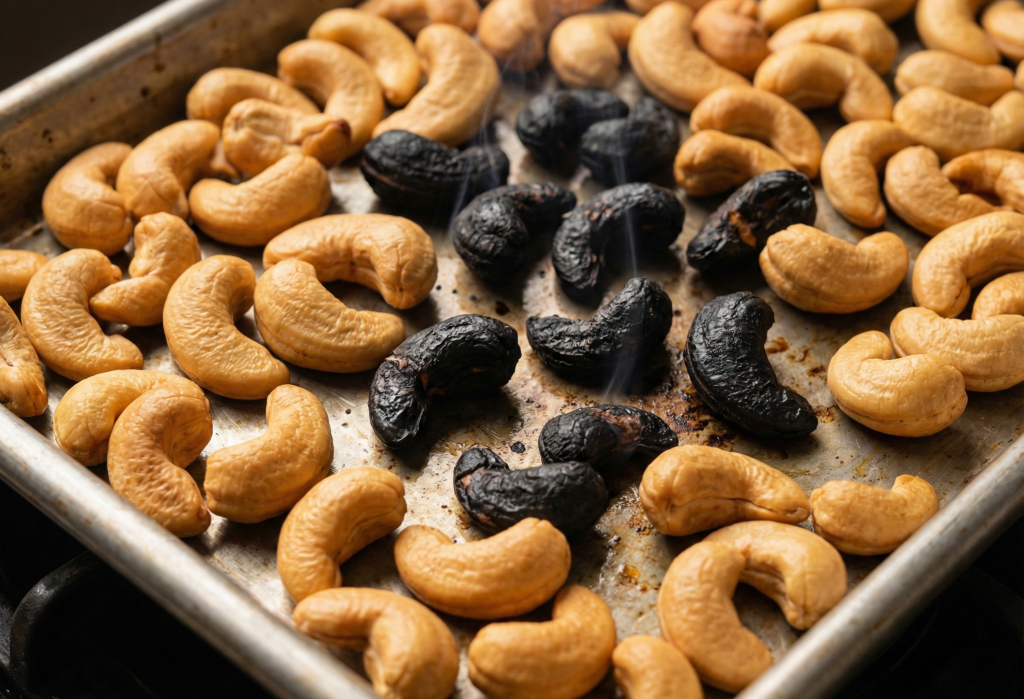
- The Roasting Disaster: This is the #1 enemy of roasters. Immature kernels have lower density and lower sugar content. When you roast a batch, immature nuts burn instantly while mature nuts are still roasting. You end up with a mix of “burnt charcoal” and “perfect nuts,” ruining the entire batch’s flavor profile.
- Economic Loss: You are buying volume, but you are losing weight. They contribute little to the actual food value.
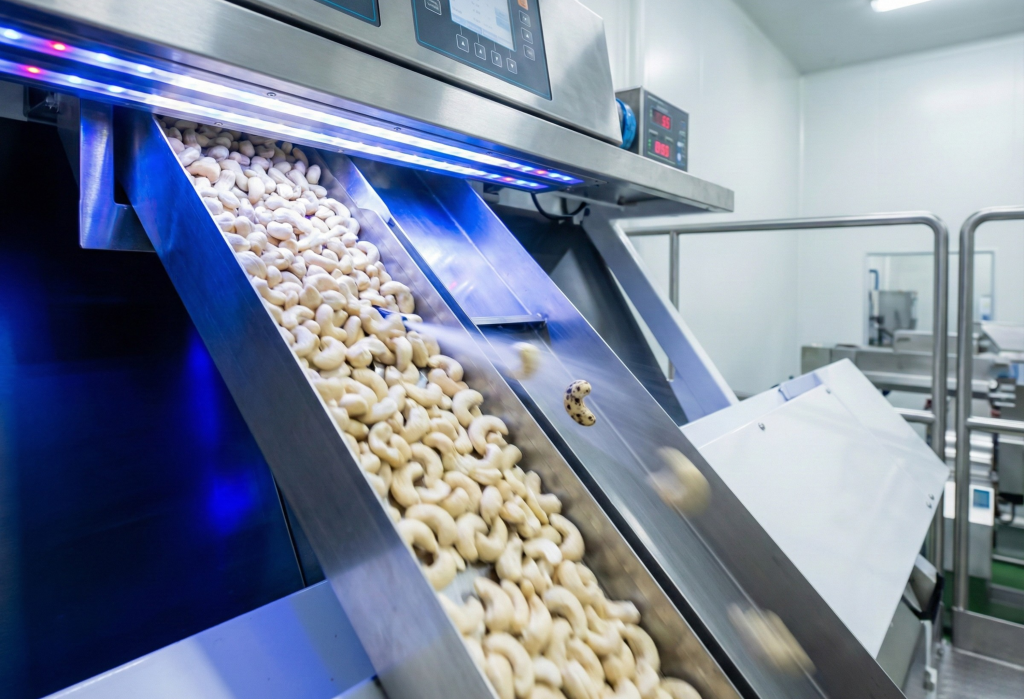
- An Supply’s Protocol: We go beyond visual sorting. We use Gravity Separators. By vibrating the kernels over a specific airflow, lighter/immature beans float to the top and are discarded, leaving only the dense, fully developed kernels for your premium packs.
2. Scraped Kernels (The “Shelf-Life Killer”)
Also known as: Knife cuts, Peeling damage.
This occurs during the mechanical peeling process when the blade cuts too deep, slicing off a piece of the kernel’s flesh or scratching the surface significantly (more than 5mm).
- Why It Hurts You:
- Oxidation Accelerator: The skin of the nut is its natural barrier. When you scrape the flesh, you rupture the oil cells. These exposed oils react with oxygen much faster, leading to rancidity (stale taste) weeks before the expiration date.
- Aesthetics: In a clear retail jar, scraped nuts look “beat up” and low quality.
- An Supply’s Protocol: This is a machinery calibration issue. Our peeling machines are calibrated daily to handle specific nut sizes (W240 vs W320). We maintain a low breakage rate and manually pick out heavily scraped kernels during the final grading.
3. Spotted Kernels (The “Visual Killer”)
Also known as: Adhering Testa, Black Spots.
This happens when small patches of the cashew skin (testa) fail to peel off, leaving black or dark brown spots on the white kernel. It can also be caused by minor insect stings or fungal spots on the raw nut.
- Why It Hurts You:
- Consumer Perception: To an average consumer, a black spot looks like dirt, insect poop, or mold. They don’t know it’s just harmless skin. They will return the product, damaging your brand reputation.
- Specification Breach: AFI strictly limits adhering testa (greater than 2mm) in First Quality grades.
- An Supply’s Protocol: We employ a Double-Defense System:
- Optical Color Sorters: High-tech cameras blast away kernels with dark spots.
- The “Human Eye” Check: Machines can miss spots on the curved inner side of the nut. Our experienced workers do a final belt check to hand-pick these tricky defects.
The “An Supply Buffer”: Why We Grade Stricter
If AFI allows 3% for a certain defect, we aim for 1% at our factory.
Why? Because shipping is rough. Vibration causes friction. Heat causes oil release.
By shipping cleaner than the standard requires, we ensure that when you open the container in New York, Hamburg, or Dubai, the cargo is still compliant, preserving your yield and your reputation.
Conclusion
Don’t let “hidden defects” eat your margin. Sourcing cashews requires a partner who understands the science of the nut, not just the price.
Stop paying for defects. Start sourcing with An Supply.