In the world of coffee safety, Caffeine is the star, but Ochratoxin A (OTA) is the villain.
For importers targeting the European Union, Japan, or the US, OTA is the single biggest chemical risk. It is a mycotoxin produced by mold (Aspergillus ochraceus) that causes kidney damage.
The EU limits are unforgiving: 5 ppb (parts per billion) for roasted coffee and 3 ppb for soluble coffee. To put that in perspective, that is equivalent to 5 seconds in 32 years.
If your shipment exceeds this limit, it is not sent back—it is destroyed at your expense.
At An Supply, we treat OTA contamination as a zero-tolerance issue. We don’t just “hope” the coffee is clean; we engineer a supply chain that makes it impossible for OTA-producing mold to survive.
1. The Root Cause: Moisture Management
OTA is not inherent in the bean; it is a result of poor post-harvest processing. Mold grows when moisture activity (aw) is high.
- The Danger Zone: Coffee cherries left drying too long on damp ground or re-wetted by rain.
- An Supply Protocol:
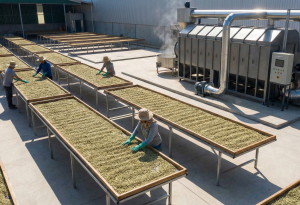
- Raised Beds & Mechanical Drying: We prioritize drying on raised beds or mechanical dryers to ensure airflow. We aim to bring moisture content down to 12.5% rapidly (within the safe window) to halt fungal growth immediately.
- No “Rewetting”: Once dried, beans are stored in waterproof environments. We never allow dried beans to come into contact with rain or morning dew.
2. The Storage Defense: Controlling the Micro-Climate
Even perfectly dried beans can develop OTA if stored incorrectly.
- The Risk: Storing sacks directly on concrete floors (which sweat) or against walls (which trap moisture).
- An Supply Protocol:
- Palletization: All coffee is stored on wooden/plastic pallets, at least 15cm off the ground and 50cm away from walls.
- Ventilation: Our warehouses monitor relative humidity (RH). If humidity spikes, we use industrial dehumidifiers.
- Hygiene: We strictly prevent “cross-contamination” by ensuring no moldy or defect beans are stored near clean lots.
3. Defect Removal: The “Black Bean” Connection
There is a strong correlation between Black/Moldy beans and high OTA levels. A single moldy bean can spike the OTA reading of an entire sample.
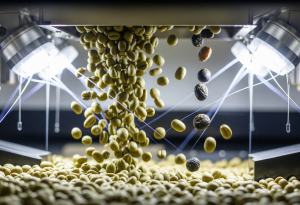
- An Supply Protocol: Our Color Sorters are calibrated to aggressively remove black and moldy beans. By physically removing the “infected” hosts, we drastically reduce the overall toxin load of the batch.
4. Verification: The Lab Test
We do not rely on visual inspection alone because OTA is invisible.
- The Eurofins/SGS Standard: For sensitive markets (EU), An Supply conducts HPLC (High-Performance Liquid Chromatography) testing on composite samples before shipment.
- The Guarantee: We guarantee that our coffee meets the specific regulations of your destination country. If the contract says “Max 5 ppb,” we ship coffee that tests well below that safety margin.
5. Transport Protection
The voyage is the final hurdle. “Container Rain” can reactivate dormant mold.
- An Supply Protocol: As mentioned in our packaging guide, we use Desiccant poles and Kraft paper lining to ensure the container remains a “dry zone” from Vietnam to your port.
Conclusion
OTA management is not about luck; it is about discipline.
An Supply provides the discipline so you can provide safe, compliant coffee to your customers.
Don’t risk a border rejection. Source safe coffee with An Supply.