The Nightmare Scenario
It takes 30 to 45 days for a shipment to travel from Vietnam to Europe or the US. In that time, a container is not just a metal box; it is a closed ecosystem subject to extreme temperature fluctuations.
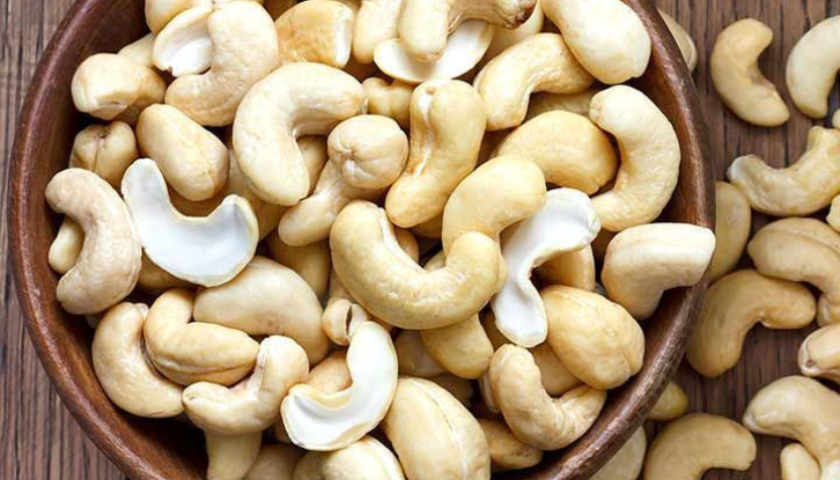
For a B2B importer, there is nothing more terrifying than the “Unboxing Moment.” You break the seal, open the doors, and instead of the fresh, nutty aroma of premium cashews, you are hit with the heavy, stale smell of mold. In seconds, thousands of dollars in value evaporate, and your production schedule collapses.
The culprit? Uncontrolled Moisture.
At An Supply, we don’t treat moisture control as a “checkbox” on a form. We treat it as a battle for your profit margins. Here is exactly how we prevent mold during transit.
The Science of “Safe Zones” (Technical Deep Dive)
Many suppliers will tell you that Standard Export Quality allows for 5% moisture. While technically true, relying solely on this borderline figure is dangerous.
- The Danger Zone (>5%): Above 5%, the water activity () in the nut increases, activating enzymes that break down fats. This leads to rising Free Fatty Acids (FFA), rancidity, and eventually, visible mold growth.
- The Safe Zone (3% – 5%): This is the sweet spot. It ensures the nut remains crunchy (texture) and stable (chemistry) without becoming too brittle and prone to breakage.
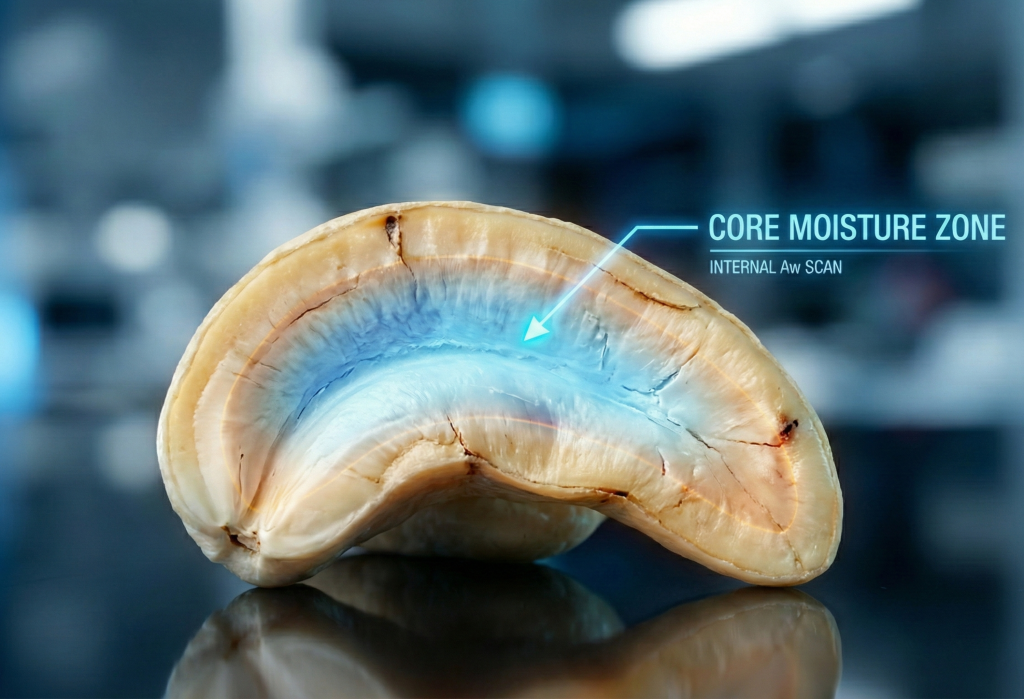
The “Core” Problem: A common failure in the supply chain is relying on “surface readings.” Rapid drying can make the outside of the nut appear dry while moisture remains trapped in the core. During transit, this internal moisture migrates out, creating a humid microclimate inside the vacuum bag.
How An Supply Acts as Your “Moisture Shield”
We understand that you are not in Vietnam to check every bag. That is why we are. We operate with a mindset of “Paranoid Quality Control”—we assume things will go wrong so that we can ensure they go right.
Here is the An Supply Protocol for Cashew Moisture Control:
1. Physical Verification (No Blind Trust)
We do not rely solely on factory lab reports. Our QC team is physically present at the warehouse before loading. We use calibrated moisture meters to probe random sacks deep within the pallet stack—not just the easy-to-reach ones.
- If the meter reads 5.1%, we reject the lot. No compromises.
2. The Container Floor Check (The Overlooked Risk)
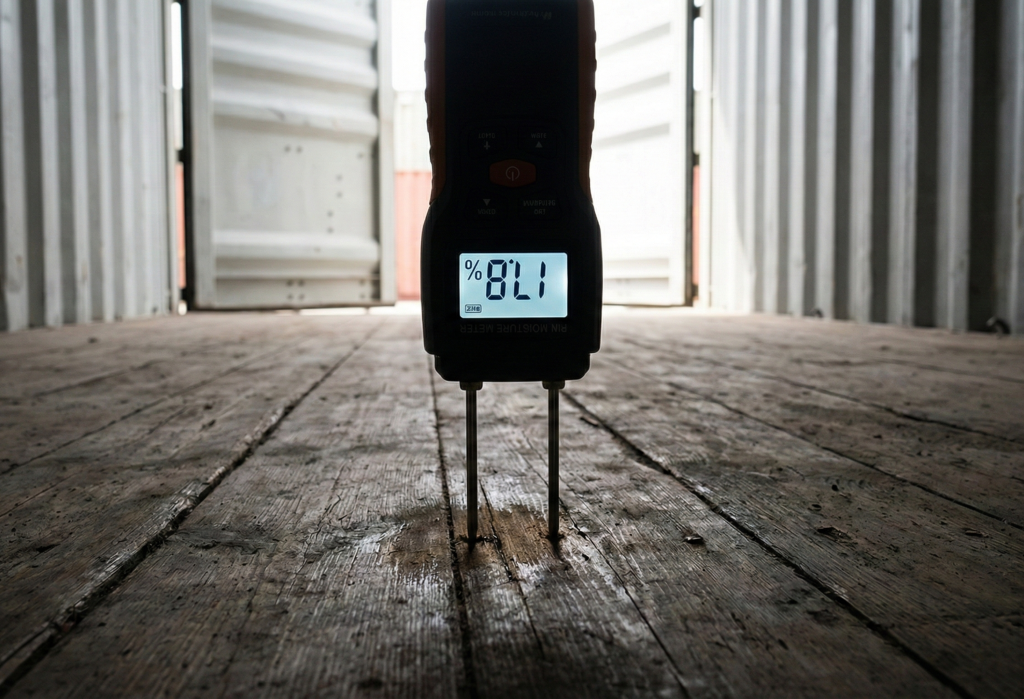
This is a detail many amateurs miss. The cashews might be dry, but is the container dry? Wooden floorboards in containers can hold gallons of water. If a container was previously washed and not dried properly, that moisture will evaporate during transit (the “Container Rain” effect), ruining your cargo.
- An Supply Standard: We measure the moisture content of the container floorboards. If it exceeds 18%, we demand a replacement container immediately.
3. Strategic Desiccant Usage
We calculate the specific desiccant requirement based on the transit time and route. We don’t just throw in a few bags of silica gel. We ensure high-absorption Calcium Chloride poles are used and positioned correctly to maximize airflow and absorption capacity.
Conclusion: Buying Peace of Mind
When you source from An Supply, you aren’t just buying raw cashew nuts. You are buying a guarantee of arrival condition.
We obsess over the details—from core moisture readings to container floor dryness—so you never have to fear opening those container doors.