In the Vietnamese Robusta market, Screen 18 (7.1mm) is often marketed as the “King” of beans, commanding a premium price over Screen 16 (6.3mm).
This leads to a common misconception among international buyers: “Bigger beans must taste better.”
The short answer is: No. From a chemical perspective, size does not dictate flavor intensity. A Screen 16 bean grown at high altitude in Dak Lak will taste infinitely better than a Screen 18 bean grown in a low-lying area.
However, size does dictate Roasting Thermodynamics and Visual Value. At An Supply, we want you to spend your budget wisely. Here is the technical breakdown of which screen size fits your business model.
1. The Physics of Roasting: Heat Transfer
The most critical factor for a roaster is not how big the bean is, but how uniform the batch is.
- Thermodynamics: A large Screen 18 bean takes more energy and time for heat to penetrate to the center (endothermic phase) compared to a Screen 16 bean.
- The Risk of Mixing: If you buy a cheap “Unscreened” lot or a supplier who blends S16 and S18 carelessly, you face a disaster. The S16 beans will burn (char) before the S18 beans are fully developed.
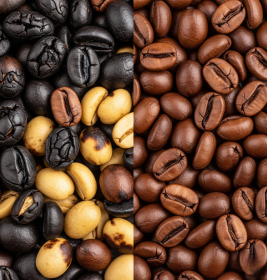
- An Supply’s Solution: Whether you buy S16 or S18, we guarantee High Retention (Min 90-95%). We rigorously sieve our coffee so that every bean in your drum reacts to heat at the same rate.
2. Flavor Profile: Is There a Difference?
Surprisingly, barely any.
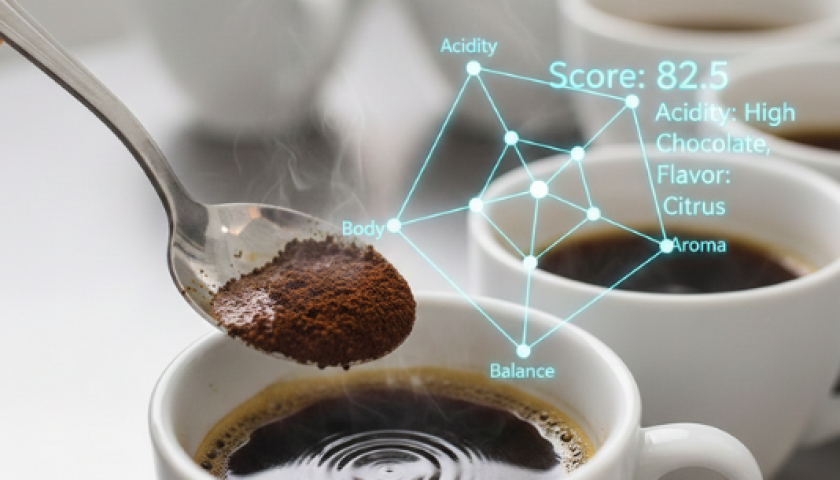
- Chemistry: Both sizes, if harvested from the same tree and processed the same way (e.g., Dry Polished), have nearly identical chemical compositions (Caffeine, Sugars, Lipids).
- The Nuance: Some master roasters argue that Screen 16 is actually denser, allowing for a more intense, compact flavor profile in espresso blends. Screen 18, being larger, can sometimes be slightly more porous, offering a “softer” cup. But for commercial Robusta, the difference is negligible to the average consumer.
3. The Economics: When to Buy What?
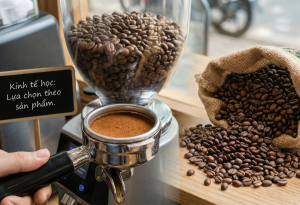
Don’t waste money on specs you don’t need. Choose based on your final product:
1. Choose Screen 18 (The “Showstopper”) IF:
- You sell Whole Bean: If your customer sees the beans in a clear bag or a hopper, visuals matter. Large, bold S18 beans look premium and justify a higher retail price.
- You are Roasting Dark: Larger beans can withstand longer roast times and higher temperatures with less risk of turning into charcoal.
2. Choose Screen 16 (The “Smart Choice”) IF:
- You sell Ground Coffee / Capsules / Instant: Once you grind the coffee, the size becomes irrelevant. No consumer knows if the powder came from S16 or S18.
- You want Cost Efficiency: S16 is typically cheaper than S18. By switching to S16 for your ground coffee lines, you can save significant margin without sacrificing a single point of flavor score.
4. An Supply’s Grading Standard
We don’t just rely on standard sieves.
- The “90% Rule”: Standard export contracts often require 90% on screen. We aim for internal calibration higher than this to account for vibration during transit.
- Destoning: Regardless of size, we run both S16 and S18 through stringent destoners. A small stone is just as dangerous as a big one.
Conclusion
Size is about Physics and Esthetics. Flavor is about Origin and Processing.
- If you need shelf appeal, buy An Supply Screen 18.
- If you need profit margin for ground coffee, buy An Supply Screen 16.
Still unsure? Let us send you samples of both to roast and compare side-by-side.