In international trade, distance creates distrust. When you are in London and your supplier is in Vietnam, how do you know the Cashews being loaded into the container are the same ones you approved in the sample bag?
You don’t. Unless you have a referee.
That referee is the Third-Party Inspection Company (SGS, Vinacontrol, CafeControl, Intertek).
Some suppliers try to talk you out of it to “save costs.” At An Supply, we do the opposite. We believe independent inspection is non-negotiable. It is the only way to transform a “promise” into a “guarantee.”
Here is why we encourage every partner to bring in the inspectors—and how we prepare for them.
1. The “Golden Sample” Trap vs. Random Sampling
The oldest trick in the book is the “Golden Sample”—sending a hand-picked, perfect bag to the buyer while the warehouse is full of junk.
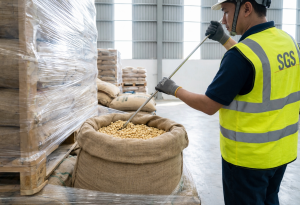
- The Inspector’s Role: SGS/Vinacontrol does not look at the sample we send you. They go to the warehouse, climb over the stacks, and pull random bags from the middle of the pallet (where bad beans are usually hidden).
- An Supply’s Confidence: We don’t hide bad bags because we don’t have bad bags. We stack our goods to allow easy access for inspectors to pull samples from anywhere—top, bottom, or center.
2. The Weight Game: Buying Air vs. Buying Product
Scales can be rigged. Tares can be manipulated.
- The Inspector’s Role: They verify the calibration of the bridge scale. They supervise the empty truck weighing and the full truck weighing. They count the bags physically.
- An Supply’s Protocol: We usually pack 0.5% extra weight (franchise weight) to account for moisture loss during transit. If you order 100kg, we pack 100.5kg. The inspector’s weight note proves we deliver more than you paid for, never less.
3. Moisture & Quality: The Unbiased Verdict
Internal lab reports can be faked. A report from a Swiss-headquartered inspection firm cannot.
- The Inspector’s Role: They seal the composite sample and test it in their own ISO-certified labs. Their result is final. If they say Moisture is 13% (Failed), we cannot argue.
- An Supply’s Protocol: We perform a “Pre-Inspection Audit.” Our internal QC team runs the exact same tests as SGS one day before the inspector arrives. If the lot is borderline, we re-process it immediately. We never waste the inspector’s time (and your money) on a failed inspection.
4. Container Sealing: The Chain of Custody
The most dangerous moment is after the inspection but before the ship leaves. Unethical suppliers might swap the goods after the inspector leaves.
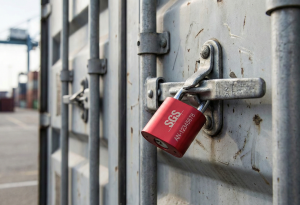
- The Inspector’s Role: The “Loading Supervision”. The inspector watches the bags go into the container. Once full, they apply their own SGS/Vinacontrol Seal on the container door locks.
- An Supply’s Guarantee: That seal number is recorded on the Bill of Lading. When the container arrives at your warehouse, if that seal is broken, you know the tampering happened in transit, not at our factory.
5. Which Inspector Should You Choose?
- SGS / Intertek: The global gold standard. Recognized by every bank and customs authority worldwide. Best for strict L/C contracts.
- Vinacontrol / CafeControl: The local experts in Vietnam. They specialize specifically in Coffee and Cashews. They are often faster, more affordable, and deeply knowledgeable about local agricultural specs.
- An Supply’s Stance: We work with whoever YOU trust. We have zero “special relationships” with inspectors that compromise integrity.
Conclusion
A supplier who resists inspection has something to hide.
A supplier who welcomes inspection has something to prove.
An Supply has nothing to hide.
Ready to start a transparent partnership? We are ready for your inspectors.