Fair trade cashew nuts should not be reduced to a higher buying price. For B2B buyers, fair trade is about building a sourcing system that is more responsible, more transparent, and more stable.
Price still matters, but it is not enough to evaluate whether a sourcing program is truly responsible. A higher price does not automatically show how farmers are treated, whether the same quality can be repeated, or whether the supplier has enough documents to support the claim. Buyers also need to consider packaging quality, shipment protection, and how the supplier responds when problems appear.
This guide explains how buyers can think about fair trade in a practical procurement context.
1. Fair Trade Is Bigger Than Price
Contents
- 1. Fair Trade Is Bigger Than Price
- Buyer insight
- 2. Turn Responsibility Into Procurement Criteria
- 3. Quality and Community Impact Must Work Together
- 4. How An Supply Supports Responsible Cashew Sourcing
- 5. Beyond the Label: What Buyers Should Remember
- 6. Practical Buyer Checklist
- 7.Fair Trade Cashew Nuts: Procurement Questions
- 8. How to Keep Fair Trade Practical
- 🏢 AN SUPPLY
A low price can look attractive in a spreadsheet. However, if the supply chain is unstable, the buyer may pay later through quality complaints, delayed shipments, weak documentation, reputational risk, or unreliable reorder supply.
Responsible sourcing should protect both sides. Farmers need fairer expectations, while buyers need reliable quality, clear communication, and a supplier who can support long-term procurement. In this sense, fair trade should not only be seen as a pricing topic. It should be understood as part of a stronger sourcing system.
To make fair trade useful in real procurement, buyers need to turn responsible sourcing values into clear purchasing criteria.
Buyer insight
Responsible sourcing should protect both sides. Farmers need fairer expectations. Buyers need reliable quality and clear communication.
Transition: To make fair trade useful, buyers need to turn values into procurement criteria.
2. Turn Responsibility Into Procurement Criteria
Fair trade language can become too abstract. Procurement teams need concrete questions.
| Procurement Criteria | What Buyer Should Ask |
| Origin visibility | Can the supplier explain sourcing background? |
| Quality control | What is checked before loading? |
| Documentation | What claim or sourcing documents are available? |
| Packaging | Will the product survive export handling? |
| Communication | Who responds when problems appear? |
| Reorder stability | Can the same quality be repeated? |
Buyers can review Fairtrade International standards: https://www.fairtrade.net/standard
3. Quality and Community Impact Must Work Together
Fair trade cannot succeed if the product fails commercially. Retailers and consumers still expect clean product appearance, stable quality, correct labeling, strong packaging, reliable shipment timing, and consistent reorder supply.
At the same time, quality should not be achieved by ignoring the people behind the product. The strongest sourcing programs connect both sides: commercial performance and responsible sourcing practice. For B2B buyers, this means the supplier should be able to protect product quality while also explaining the sourcing background in a clear and responsible way.
This is where the supplier’s coordination role becomes important.
4. How An Supply Supports Responsible Cashew Sourcing
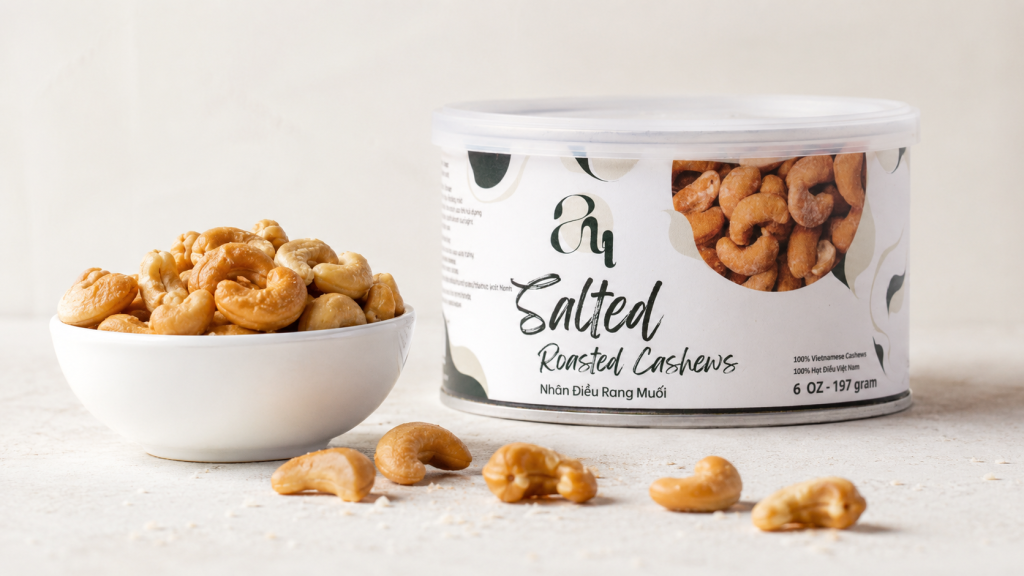
An Supply supports buyers through its farm and factory partner network, export product coordination, packaging support, and QC before loading. For responsibility-focused cashew projects, An Supply can help buyers discuss:
- Product grade
- Packaging format
- Sourcing expectations
- Available documents
- Inspection points
- Shipment planning
- Issue-resolution process
Learn more about An Supply services: https://ansupply.com.vn/about/
5. Beyond the Label: What Buyers Should Remember
Fair trade cashew nuts should not be treated as a simple label. They represent a sourcing mindset that needs to be supported by clear evidence, stable quality control, and practical supplier communication.
Before buying, buyers should understand what exactly is being claimed, what evidence supports the claim, how quality is checked, and what happens if expectations are not met. These questions help buyers avoid unsupported responsibility language and focus on real sourcing behavior.
An Supply customer service approach matters here. When challenges happen, the company aims to accompany the buyer and help solve the issue, rather than stepping away. This makes responsible sourcing more practical and more reliable for long-term B2B cooperation.
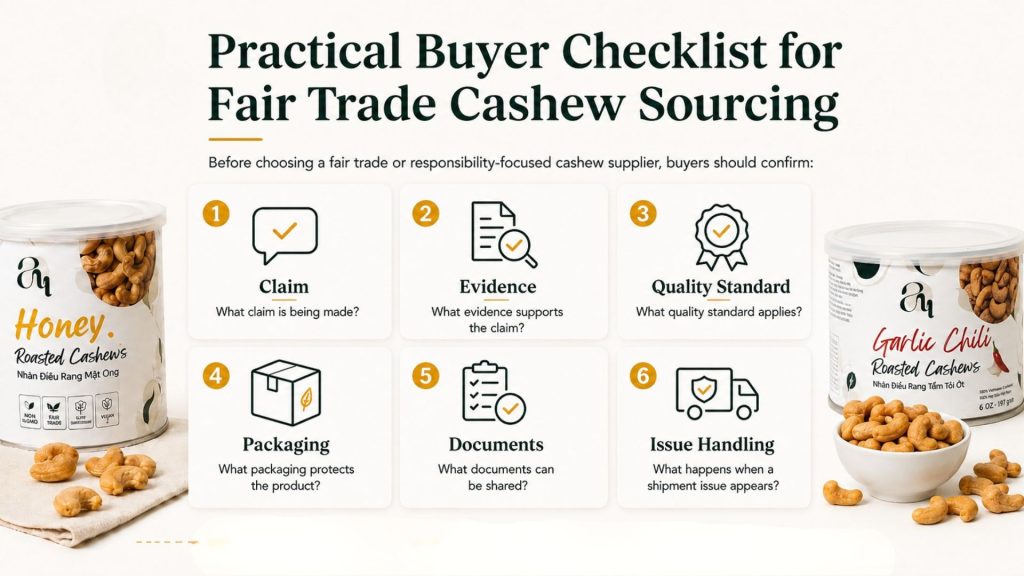
6. Practical Buyer Checklist
Before choosing a fair trade or responsibility-focused cashew supplier, buyers should confirm:
- What claim is being made
- What evidence supports the claim
- What quality standard applies
- What packaging protects the product
- What documents can be shared
- What happens when a shipment issue appears
This keeps the conversation practical. It also prevents responsible sourcing from becoming a slogan with no operating process behind it.
7.Fair Trade Cashew Nuts: Procurement Questions
Fair trade cashew nuts should be evaluated with practical procurement questions. Ask:
- What exactly is being claimed?
- What evidence supports the claim?
- What quality standard applies?
- What packaging protects the product?
- What documents can be shared?
- What happens when a shipment issue appears?
This keeps fair trade cashew nuts connected to real sourcing behavior. It also protects buyers from using responsibility language without an operating process behind it.
8. How to Keep Fair Trade Practical
Fair trade language should always connect back to buyer operations. Buyers should ask the supplier to explain what is verified, what is only a general sourcing statement, which documents can be shared, how quality is protected, how farmer or community claims should be worded, and how issues are handled after shipment.
This protects both the buyer and the supplier from making claims that sound good but are difficult to defend. For B2B buyers, this practical approach also protects the sales team. When claims are clear and evidence is organized, the sales team can speak confidently to retailers, distributors, and end customers.
That makes fair trade cashew nuts easier to position without creating unsupported promises. It also helps buyers keep future reorder conversations clearer and more commercially grounded.
🏢 AN SUPPLY
📍Floor 4, 128 Hong Ha St, Phu Nhuan Dist, Ho Chi Minh city, Vietnam
☎ 0949239579
✉ info@ansupply.com.vn