In the flavored cashew export market, choosing the right flavor strategy is not just about taste—it directly impacts product rotation, brand positioning, and long-term supply chain stability.
Choosing flavors for a snack line can feel like the “most fun” part—until you realize that one wrong call can cost you in slow-moving inventory, negative feedback, and cash flow that suddenly starts to drag.
In B2B, flavor isn’t simply about whether something tastes good. It shapes what happens after the first order: whether customers come back, whether your brand earns trust, and whether your products rotate smoothly—or stay stuck on the shelf.
There’s a practical question behind all of this: Which cashew flavors are trending globally—and how do you choose the right SKUs without turning the decision into a gamble with your brand?
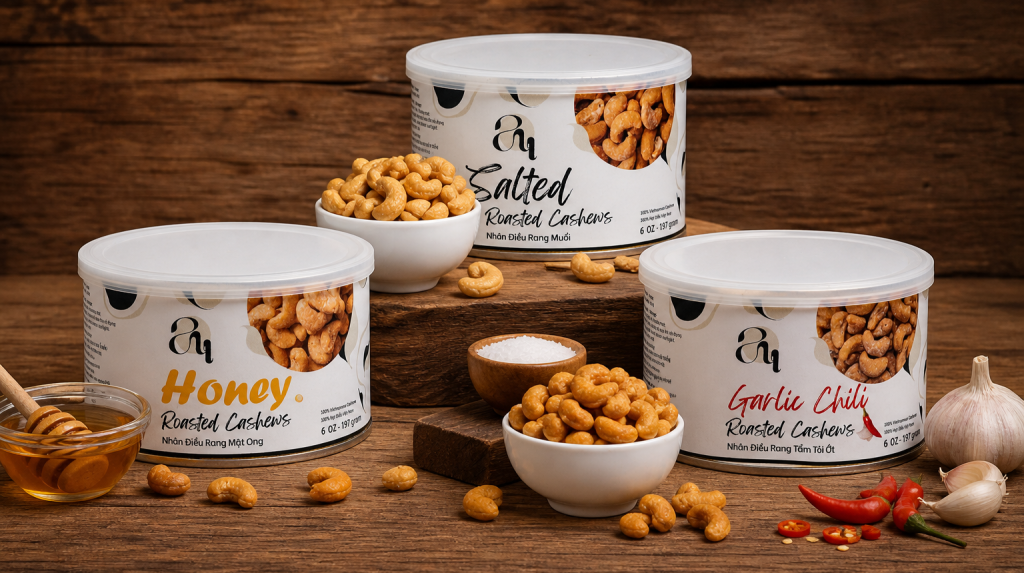
The truth is, any flavor can win—but only when you match it to the right market context and buyer psychology.
1. Salted Cashews Export Strategy
Contents
Salted cashews remain the universal baseline—especially for retailers who want predictable movement and minimal risk.
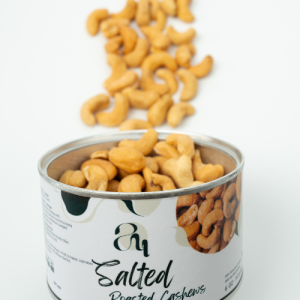
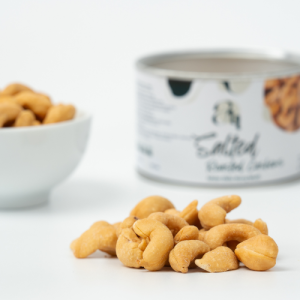
Why salted keeps winning
- Familiar taste across demographics
- Lower risk of flavor rejection
- Easier to position as “premium simple”
- Fewer variables in production compared to complex seasoning blends
Best use cases
Salted cashews are a strong first SKU when:
- You’re launching a private label line and want a safe start
- Your market prefers clean-label, minimal ingredients
- You want strong control over consistency while you scale distribution
Reality check: even a “simple” salted SKU can fail if roasting is inconsistent or packaging can’t protect crunch during transit.
2. Honey Roasted Cashews in Export Markets
Honey roasted cashews sell exceptionally well in premium and gifting segments—because they trigger something salted doesn’t: emotional appeal.
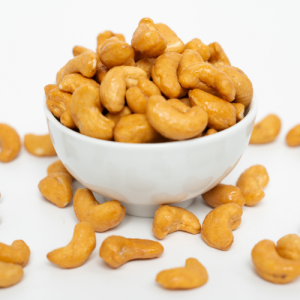
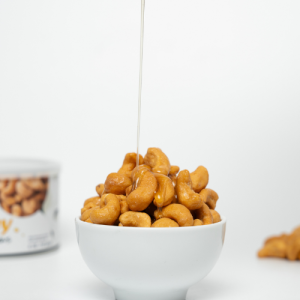
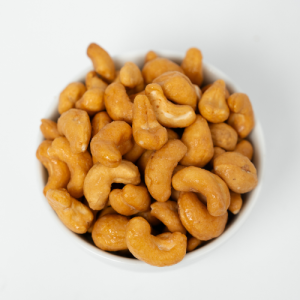
Why honey roasted performs
- Sweet, warm flavor profile that feels “treat-worthy”
- Strong fit for gifting behavior and seasonal peaks
- Premium positioning without needing an adventurous palate
What retailers should watch out for
Honey coatings and sweet seasonings can be less forgiving:
- More sensitive to humidity
- Higher risk of losing crunch if barrier packaging is weak
- Requires tight control over roasting and coating balance
If you’re exporting honey roasted SKUs, packaging and moisture control aren’t optional—they’re the difference between “premium” and “complaint.”
3. Chili Cashews Private Label Positioning
Spicy cashews are often the fastest way to stand out in crowded snack categories—especially in markets where bold flavors are rising.
Why chili works
- Strong brand signature potential
- Encourages repeat purchases among “spice-loyal” consumers
- Builds a clear identity beyond commodity nuts
The hidden risk of spicy SKUs
Spice blends can expose inconsistency quickly:
- Uneven coating
- Heat level drifting between batches
- Overpowering salt or bitterness from roasting variance
That’s why spicy private label SKUs should be built with real discipline: clear specs, controlled sampling, and stable production—not guesswork.
4. SKU Planning for Flavored Cashew Export
Many private label launches don’t fail because the product is bad—they fail because the brand tries to do too much, too fast.
A practical way to start is to build a flavor set that covers:
- Reliability
- Premium appeal
- Differentiation
A strong 3-SKU starter set (for many markets)
- Salted (baseline, stable movement)
- Honey roasted (premium + gifting)
- Chili (signature + differentiation)
From there, you adjust based on your exact market and channel.
5. Supply Chain in Flavored Cashew Export
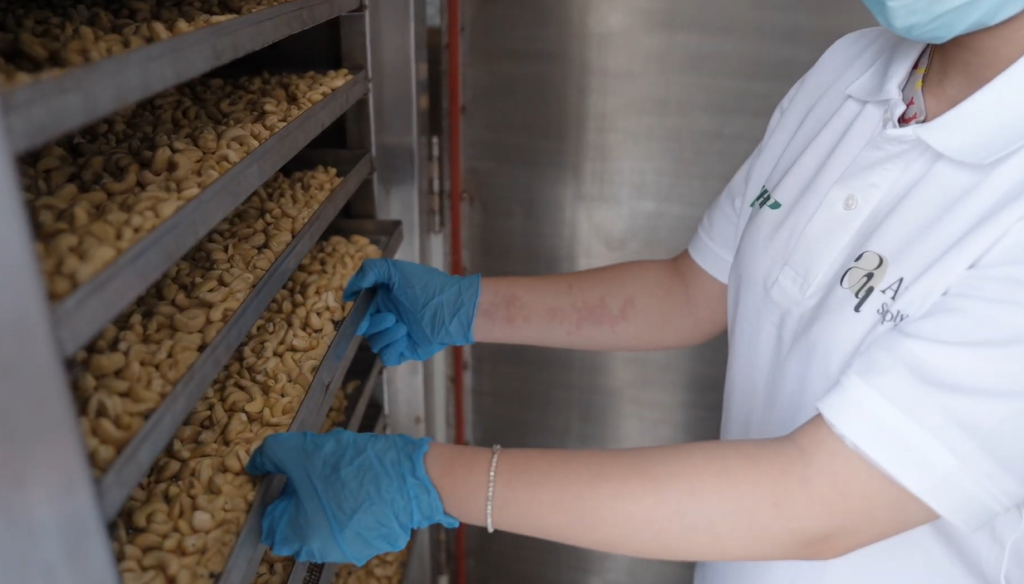
Flavored products don’t arrive on shelves the same way they leave the production line. They travel through:
- Heat
- Humidity
- Transit time
- Handling at ports and warehouses
That’s why export-ready flavored cashews require more than a good recipe.
What matters behind the scenes
- Roasting consistency
- Seasoning distribution uniformity
- Packaging barrier performance (oxygen + moisture)
- Strict pre-loading QC to catch preventable issues
6. OEM Flavored Cashew Export Partner
In international trade, buyers don’t just want a supplier. They want risk protection.
At An Supply, we support private label partners with:
- An export-standard farm & factory network that strengthens supply stability
- Flexible OEM/private label capability (flavors, formats, specs)
- Strict physical QC before loading to protect brand reputation
- A service mindset built on accompaniment and accountability
If a shipment faces an unexpected challenge, we stay on the front line with you to resolve it—because we don’t measure success by containers shipped, but by trust kept.
Evaluating a Flavored Cashew Export Partner
If you’re considering a flavored cashew export supplier, it’s critical to validate product specifications, packaging performance, and quality control processes before scaling.
At An Supply, we support partners not only in production—but in making decisions that reduce risk and protect long-term brand value.
7. FAQ
Which flavored cashews sell best globally?
Salted is the safest baseline, honey roasted performs strongly in premium/gifting segments, and chili can differentiate brands in bold-snack markets.
How do I prevent flavor inconsistency across shipments?
Define clear specs, validate samples, control roasting/seasoning processes, and prioritize strict pre-loading QC.
Does packaging affect flavor performance?
Yes. Packaging affects crunch, aroma protection, and rancidity risk—especially on long export routes.