A custom coffee blend supplier helps private label brands create a signature profile that can sell consistently, scale smoothly, and stay reliable across shipments.
A “signature blend” is one of the fastest ways to stop competing like a commodity—and start building loyalty like a real brand.
But in B2B coffee, a blend is only as strong as three outcomes:
- Will it sell consistently (not just impress in a sample cup)?
- Will it stay consistent when you scale from small test orders to full containers?c custom coffee blend supplier helps private label brands create a signature profile that can sell consistently, scale smoothly, and stay reliable across shipments.
A “signature blend” is one of the fastest ways to stop competing like a commodity—and start building loyalty like a real brand.
But in B2B coffee, a blend is only as strong as three outcomes:
Will it sell consistently (not just impress in a sample cup)?
Will it stay consistent when you scale from small test orders to full containers?c
- Will it hold up over time—through storage, transport, and shelf life—without losing its character?
That’s why custom coffee blending is both art and discipline. And if you’re building a private label line, getting this right early saves you from expensive rework later.
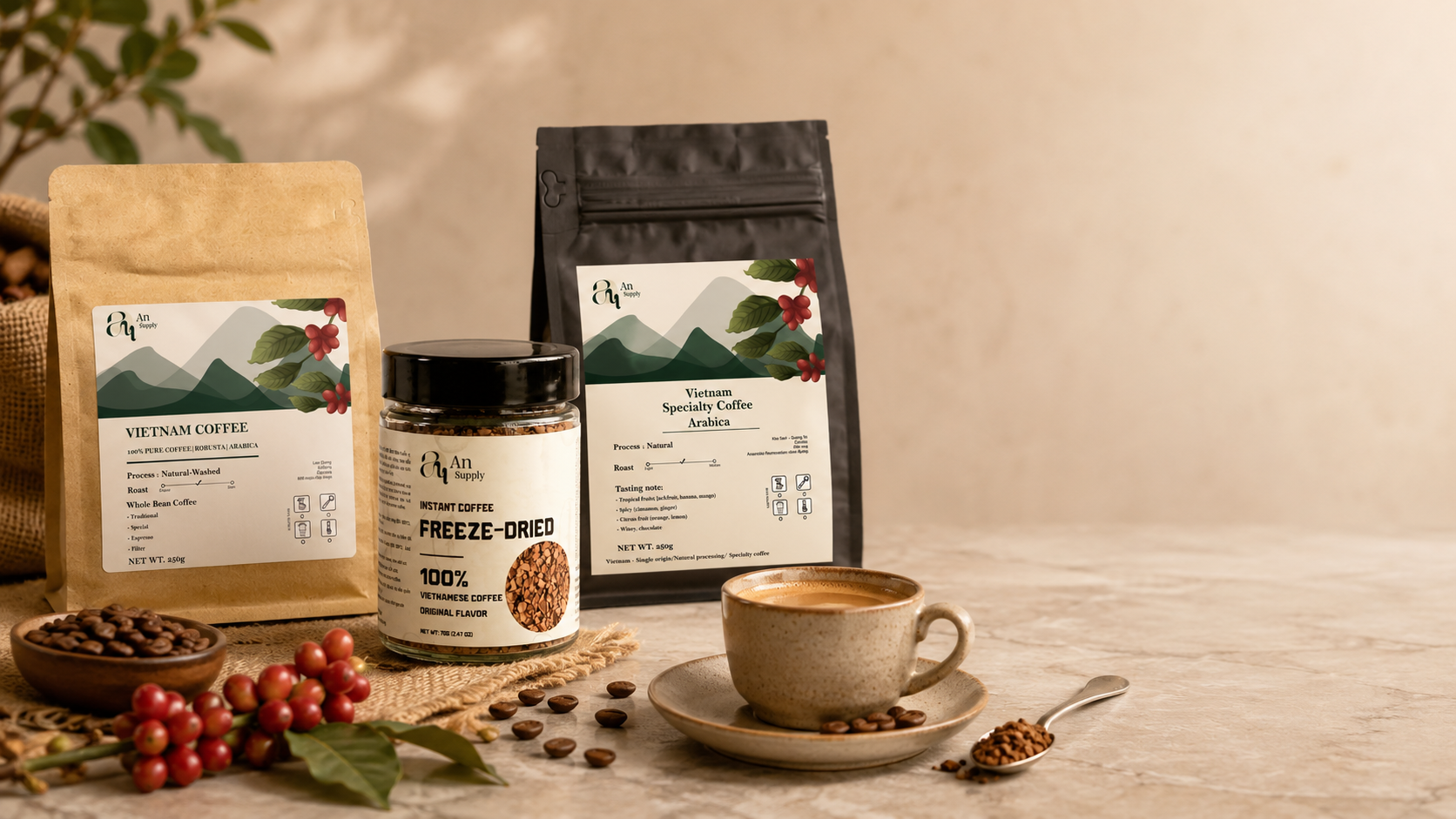
In this guide, we’ll break down how to create a signature profile for your brand—using practical blending logic, especially around Robusta and Arabica.
1. Start With the Brand Goal, Not the Ratio
Contents
- 1. Start With the Brand Goal, Not the Ratio
- What should your coffee be known for?
- 2). Robusta vs Arabica: The Practical Difference (For Buyers Who Sell Coffee)
- 3).Building a Signature Profile: A Simple, Expert Framework
- Step 1: Define the core drinking moment
- Step 2: Choose the anchor note
- Step 3: Add structure (body, finish, aftertaste)
- 4. Consistency Is the Hidden Priority in Private Label Coffee
- 5. Packaging & Shelf Life: Don’t Let a Great Blend Fade
- 6. Why Brands Choose An Supply as a Custom Coffee Blend Supplier
- 7. FAQ
- What is a good Robusta/Arabica ratio for a signature blend?
- Can I build a private label blend that stays consistent at scale?
- How do I protect aroma and shelf life for export markets?
- 8. Final Thought
Many buyers begin with a question like:
“Should I blend 70/30 or 80/20?”
A better first question is:
What should your coffee be known for?
Different brand goals create different blending strategies:
- High crema, strong body, café-style espresso (often Robusta-forward)
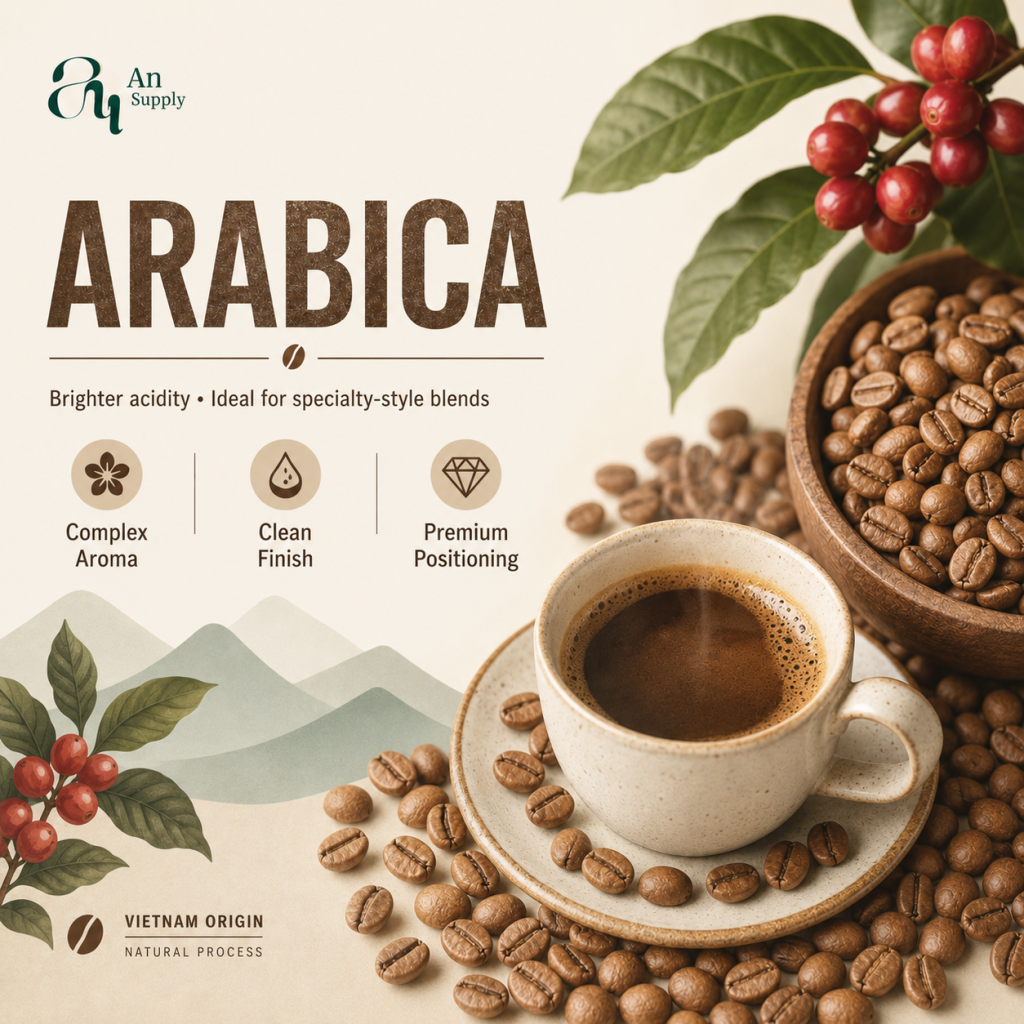
- Clean aroma, bright acidity, premium specialty perception (more Arabica)
- Balanced all-day drinker (a structured mix with a clear “house profile”)
- Instant/soluble-friendly direction (depending on format and target market)
When you define the brand goal, the ratio becomes a tool—not a guess.
2). Robusta vs Arabica: The Practical Difference (For Buyers Who Sell Coffee)
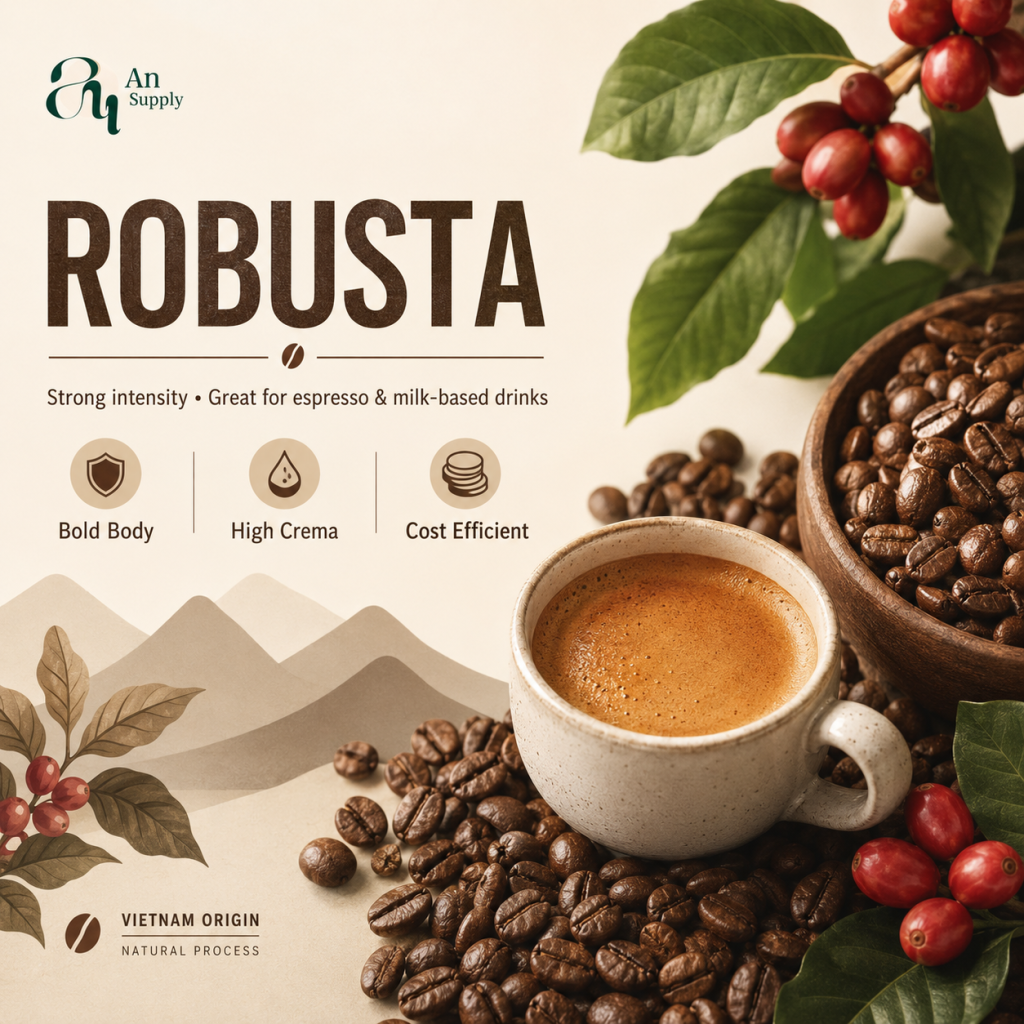
| Criteria | Robusta | Arabica |
|---|---|---|
| Flavor Profile | Bold, strong body, higher intensity | More aromatic, complex, cleaner finish |
| Espresso Performance | Higher crema potential, works well for espresso | Brighter acidity, refined aroma |
| Milk-Based Drinks | Performs well in latte, cappuccino, milk coffee | Softer taste, better for premium blends |
| Cost & Supply | More cost-efficient, stable supply options | Higher cost, more premium positioning |
| Branding Angle | Suitable for bold, everyday coffee products | Suitable for specialty-style and premium branding |
The best signature blends don’t chase trends blindly. They create a profile that matches:
- your customer’s palate
- your channel (retail, café, foodservice)
- your price positioning
- your ability to deliver the same cup again and again
3).Building a Signature Profile: A Simple, Expert Framework
Instead of starting with “percentages,” build your profile layer by layer:
Step 1: Define the core drinking moment
- Morning espresso?
- Milk-based latte/cappuccino?
- Black coffee for daily use?
- Premium gifting?
Step 2: Choose the anchor note
What should be most recognizable?
- chocolatey and nutty?
- caramel sweetness?
- floral-fruity?
- spicy-dark intensity?
Step 3: Add structure (body, finish, aftertaste)
This is where blending gets serious:
- body and mouthfeel
- sweetness perception
- bitterness control
- aftertaste length and clarity
Step 4: Confirm performance in real conditions
A blend must survive reality:
- brewing variation (not every barista is perfect)
- different water profiles
- storage time
- transit conditions
- packaging limitations
A signature blend is not the cup you brew once in ideal conditions.
It’s the cup your customers can reproduce—consistently.
4. Consistency Is the Hidden Priority in Private Label Coffee
Private label buyers don’t lose money because the blend is “bad.”
They lose money when:
- the second shipment tastes different than the first
- the café chain complains about crema drop
- the retail customer leaves a “not the same as last time” review
- the brand has to change packaging or roast direction mid-campaign
That’s why custom blending must include:
- clear flavor and performance specs
- controlled roasting direction
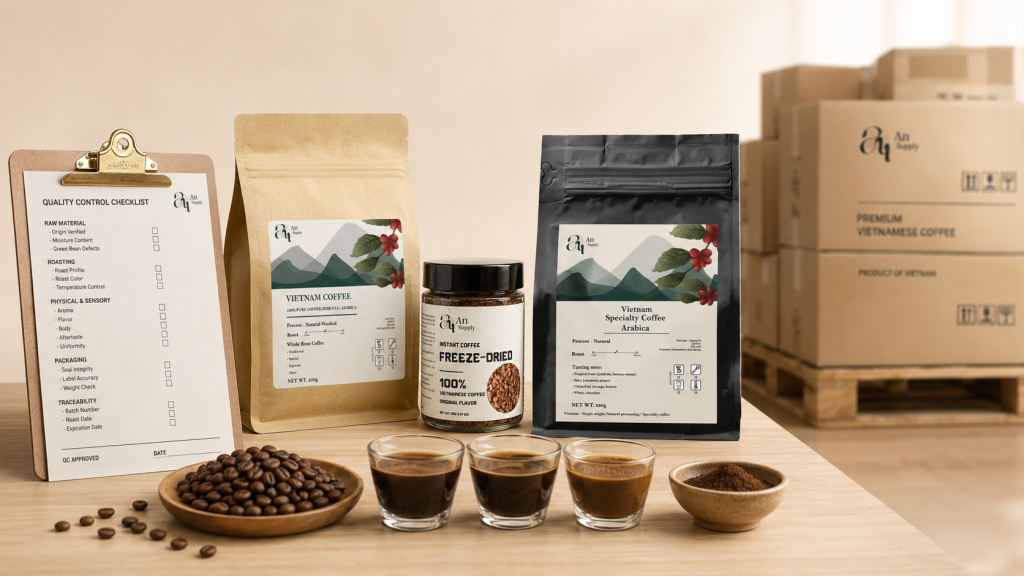
- repeatable QC checkpoints before shipment
Consistency protects your margins more than any “creative” flavor note.
5. Packaging & Shelf Life: Don’t Let a Great Blend Fade
Even the best blend can disappoint if it loses aroma or turns flat.
To protect shelf life and brand experience, you typically need:
- packaging with proper oxygen barrier performance
- sealing integrity checks
- storage guidance aligned with your distribution channel
- export-ready handling to reduce exposure to heat and moisture
When your coffee arrives strong, stable, and consistent, your brand grows faster—because repeat orders become easier.
6. Why Brands Choose An Supply as a Custom Coffee Blend Supplier
At An Supply, we support B2B buyers who want a blend they can scale with confidence—not just a one-time “nice sample.”
Partners work with us because we bring:
- an export-standard network of farms and large-scale factories
- flexible OEM/private label capability aligned with your market needs
- strict QC before loading to protect consistency and reduce avoidable issues
- a service mindset of accompaniment and responsibility—when challenges happen, we don’t step away. We work with you until the problem is solved.
In global trade, the real product is not just coffee.
7. FAQ
What is a good Robusta/Arabica ratio for a signature blend?
It depends on your channel and target taste profile. Espresso-focused blends often use a higher Robusta share for body and crema, while premium aromatic profiles lean more Arabica.
Can I build a private label blend that stays consistent at scale?
Yes—when the blend is designed with specs, controlled roasting, and repeatable QC, not just “cup preference.”
How do I protect aroma and shelf life for export markets?
Use appropriate barrier packaging, strong sealing, and export-ready handling to reduce oxygen, humidity, and heat exposure.
8. Final Thought
A signature blend isn’t a formula you write once.
It’s a profile you can ship, repeat, and defend—so your customers trust your brand every time they brew it.